
Cheetahs are the fastest land animals and their speed is critical in ensuring their survival in the unforgiving African wilderness. Unlike other big African cats like lions and leopards, cheetahs are built for speed and not for strength, which is both an advantage and a disadvantage when it comes to getting prey in the wild.
This article explores what cheetahs eat in the wild as well as how they go about hunting, and how their young ones survive before they can hunt on their own.
What Do Cheetahs Eat In The Wild?
Cheetahs are super carnivores that only eat meat - similar to other African big cats like lions and leopards. In the wild, cheetahs come about their food by hunting.
Due to their smaller size and lighter build, cheetahs have a narrower range of prey that includes most small to medium-sized animals. Cheetahs mostly eat animals that often weigh under 50 kilograms (110 lb).
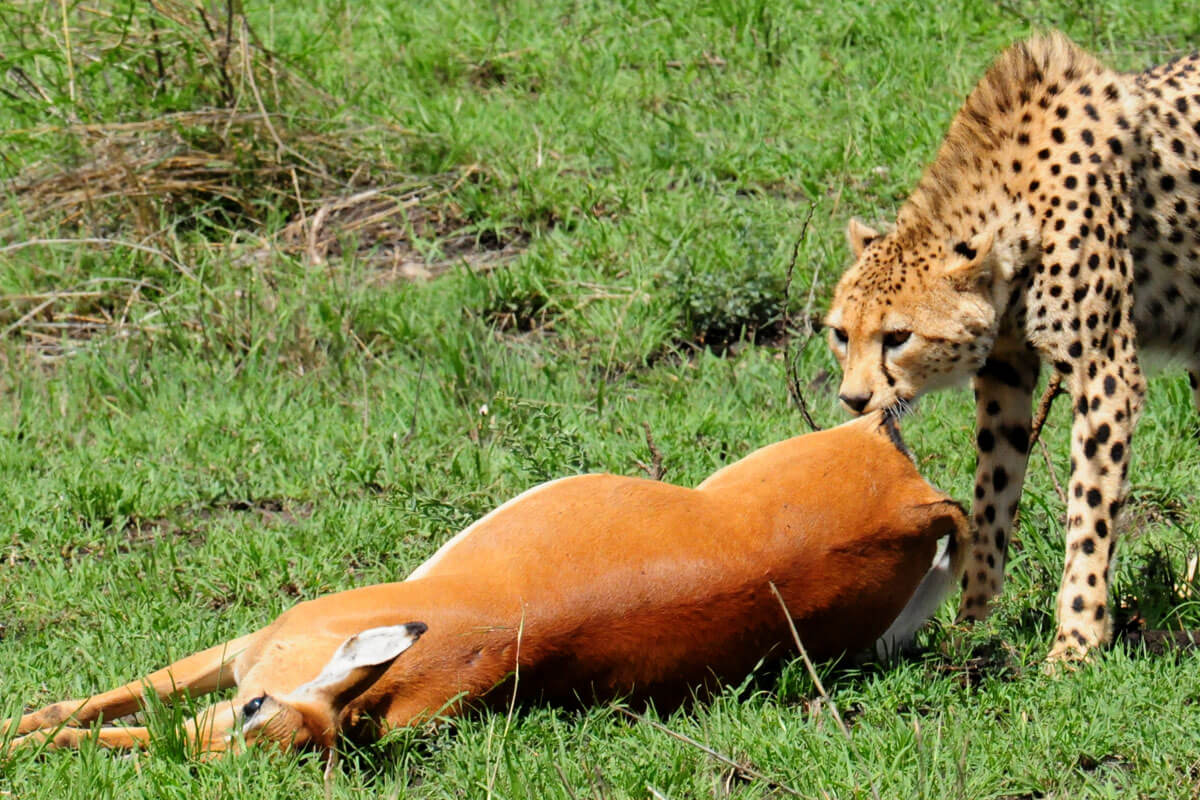
What Animals Do Cheetahs Eat?
Cheetahs often eat small and medium-sized animals like gazelles, antelopes, impalas, and more. Here are some of the common animals that cheetahs hunt and eat in the wild.
| Thomsons Gazelle | Grant's Gazelle | Sable Antelope |
| Dik Dik | Steenbok | Springbok |
| Waterbuck | Bushbuck | Duiker |
| Kudu | Impalas | Wildebeest calves |
| Guinea fowls | Warthogs | Rabbits |
| Buffalo calves | Hartebeest | Zebra calves/foals |
| Roan Antelope | Ostrich | Gemsbok |
| Hares | Oribi |
How Often Do Cheetahs Eat?
An adult cheetah hunts and eats 2 to 3 times in a week. A female cheetah with cubs will hunt every day to be able to produce enough milk for the cubs. After eating, they may not hunt again for a few days, as they rest and digest their meal.
Depending on the other factors in the local ecosystem, cheetahs might hunt more regularly either because the predominant and easy prey is small, or the other big predators steal the cheetah's kill more often.
How Do Cheetahs Hunt?
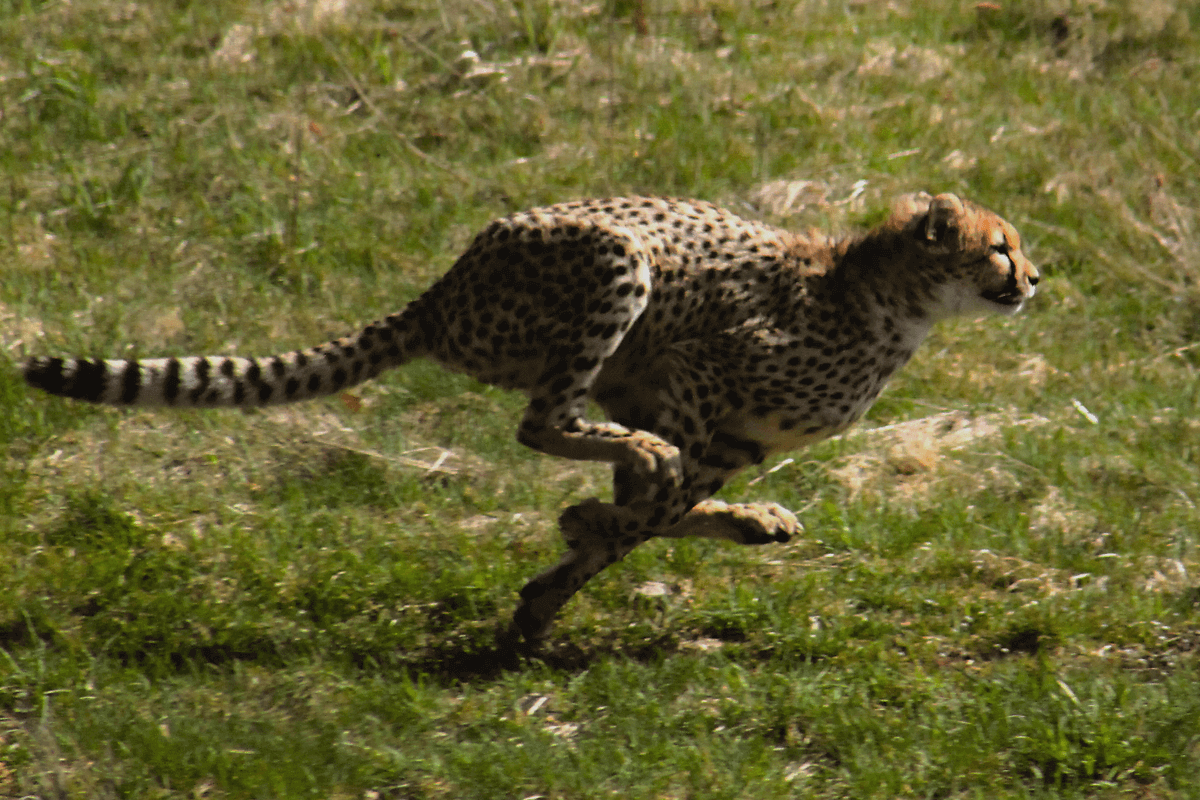
Because of their blazing speed, watching cheetahs hunt is quick and spectacular. Cheetahs hunt by utilizing their great eyesight to spot their target and quietly sneak up on it.
When the cheetah is close, it chases after the animal and trips it before killing the prey. They kill the prey by driving their canine teeth into the throat till the animal dies. The prey is then dragged to a safer spot where the cheetah's kill won't be stolen by lions, leopards, or hyenas.
Related article: Comparing the hunting success of African predators [including cheetah]
When Do Cheetahs Hunt
Cheetahs are mostly diurnal and hunt during the day. This is unlike other predators that prefer to hunt very early in the morning.
When the day time temperatures are very high - above 35oC (95oF), most cheetahs will adjust their hunting to earlier in the morning or early evening when the temperatures are slightly more bearable. Cheetahs are also capable of hunting at night.
What Do Cheetah Cubs Eat?

Unlike many other animals in the wild, cheetah cubs are quite helpless in their early infancy. Cheetah cubs are born blind and toothless which is a recipe for death in the savannah.
Cheetah cubs feed on their mother's milk for the first couple of months of their lives. After about 6 months, the young cubs start hunting smaller prey like hares, and slowly, their skills improve for better. By the time the cubs reach 2 years, they will be fully independent and capable of fully living on their own.
Do Cheetahs Eat Fish?
Cheetahs do not eat fish. Cheetahs live in the savannah and like to hunt small and medium animals like gazelles, hares, antelopes, and more. Like lions, cheetahs are not great swimmers and do not hunt in the water.
Cheetahs do like to stay near waterbodies because that is where the animals they hunt can easily be found.
Do Cheetahs Eat Birds?
Yes, cheetahs do occasionally eat birds, although it's not a significant part of their diet. Like all animals in the wild, they are opportunistic hunters and don't let a chance pass them by.
If the opportunity arises, especially in the case of young or injured birds, cheetahs might catch and eat them. Birds would generally be a small and supplementary food source for cheetahs.
Don't expect to see a cheetah chasing birds while you are on safari, but if the opportunity rises, they will eat a bird.
Do Cheetahs Hunt Zebras
A healthy zebra is too strong for a cheetah to hunt but cheetahs can sometimes hunt young zebra foals when they are still weak and easier to kill.
A healthy zebra is too strong for any cheetah because one strong kick with the hind legs will seriously injure most animals - and cheetahs know this.

Do Cheetahs Drink Water?
Like most animals, cheetahs drink water. Cheetahs are however very adapted to their savannah habitat and drink water once or twice a week.
Like all predators, cheetahs hang around water sources where they will easily hunt for food, and while they get their hydration for the meat, they also do drink water from the same sources as the other animals.
What Do Cheetahs Eat At The Zoo?
Cheetahs in the captive environments of zoos or sanctuaries have a different diet from their wild counterparts. In the zoo, cheetahs are often fed beef or meat from other animals such as rabbits, chickens, donkeys, and more.
In captivity, cheetahs do eat more regularly than in the wild where they have to hunt and fend off other predators. Depending on the health of the cheetah, its diet can be customized to provide the necessary nutrients.
Do Cheetahs have predators?
Despite being at the top end of the food chain like other big cats, cheetahs have to worry about predation. Their specific case may not be completely similar to smaller antelopes, but the wild is for the strong and cheetahs have to be on the lookout.

Cheetahs face threats from several larger and more dangerous predators in the wild, including lions, leopards, and hyenas.
Lions are the primary predators of cheetahs. They often chase cheetahs away from their kills, and in some cases, these encounters lead to injury or death for the cheetah. Lions often kill cheetahs to eliminate competition for prey.
Leopards, being solitary and territorial, also pose a threat to cheetahs. They may kill cheetahs to reduce competition for food and territory. Like lions, leopards often target cheetah cubs, which are the most vulnerable members of the species.
Hyenas are another significant threat for cheetahs in the wild. As the notorious scavengers, hyenas can overpower cheetahs since they tend to move in numbers. They frequently steal cheetahs' kills, and these confrontations can sometimes result in the death of the cheetah.
Cheetah cubs are particularly at risk. They are often targeted and killed by these larger predators, which is why many cheetah cubs don't survive their first year. The likelihood of such encounters and killings depends on the conditions of the ecosystem, particularly the availability of easier prey. When prey is scarce, these predators are more likely to attack cheetahs to reduce competition and secure food.
So, while cheetahs are formidable hunters, they must constantly be on the lookout for these larger predators that can pose a serious threat to their survival.
Closing Thoughts
In the African wilderness, survival is for the fittest. A cheetah's sharp eyesight and incredible speed make it a great hunter, allowing it to catch the prey it needs for sustenance.
Understanding what cheetahs eat is important because their diet helps keep the ecosystem balanced. Their hunting of animals like gazelles and impalas helps prevent overgrazing, which keeps the grasslands healthy.
Cheetah cubs are most vulnerable to the danger of other predators, but as they grow and learn how to hunt and survive on their own, the risk is slightly reduced. Despite the dangers they face, cheetahs are crucial to the ecosystem, and need to be protected if our wild places are to be preserved for the future.